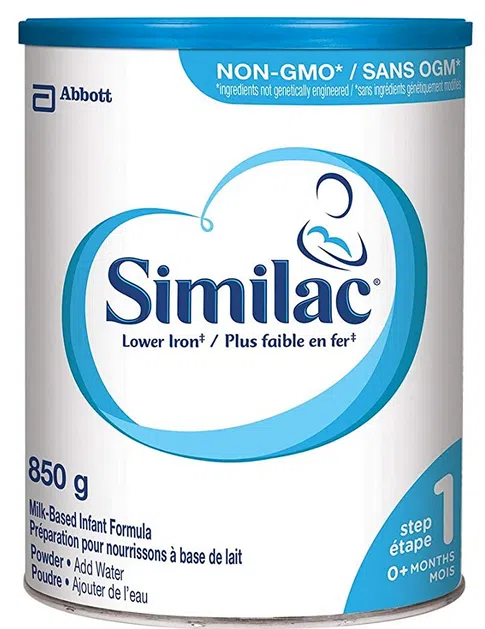
Screen grab of Canadian manufactured baby formula on amazon.ca.
SIOUX FALLS, S.D. (KELO.com) — Baby formula shortages have plagued the nation and South Dakota since the beginning of the COVID-19 pandemic.
That’s when supply chain issues became a problem. Then the war in Ukraine began, which made things worse. Finally, an Abbot Nutrition formula plant in Sturgis, Michigan, shut down due to contamination by bacteria. That is what brought the situation to a head in May.
At that time, the Biden Administration took action and authorized the Department of Health and Human Services to do what was necessary to get enough formula to hungry children. From there, KELO News has learned from HHS that the department took three distinct steps to solve the crisis.
1) They invoked the Defense Production Authorization Act to prioritize U.S. producers when purchasing the raw materials needed to make the formula.
2) HHS is currently paying UPS and Fedex to fly cargo planes full of formula from overseas producers to U.S. markets. Additionally, they coordinated space donated from private airlines to carry formula as well.
3) HHS has expedited applications from foreign producers to sell in the U.S. These applications typically take 5-6 weeks to process. However, Health and Human Services cut that time down to three days.
Still, that doesn’t mean the formula immediately goes from plane to shelf. The food must be inspected by the FDA first. Then the producers put it into their distribution networks. The fact that most of the baby formula is from foreign companies with no networks in the US explains why things are taking so long.
KELO.com News has obtained a list of the companies approved for distribution. They are Kendamil, Bubs Australia, Nestle, and Danone. The HHS reports that 55 million eight-ounce bottles of formula will be stateside by the end of the week. While it won’t be on the shelves tomorrow, it is now in the distribution pipeline.